
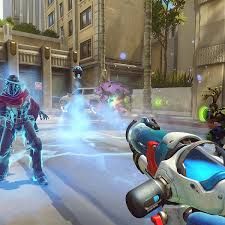
In an era defined by digital connectivity, the landscape of interactive entertainment has evolved beyond solitary experiences. Online gaming, once a niche hobby, has matured into a primary social platform where millions forge and maintain relationships. While single-player campaigns offer immersive narratives, the act of playing online games with friends delivers a distinct set of psychological, social, and cognitive benefits that extend far beyond the screen. For professionals, students, and families alike, cooperative and competitive play serves as a vital tool for connection, stress relief, and skill development.
Strengthening Social Bonds Across Distance
The most immediate benefit of online gaming with friends is the preservation and deepening of relationships. Geographic dispersion—whether due to career moves, university enrollment, or family relocations—often erodes regular social contact. Online games provide a structured, low-pressure environment to bridge that gap.
Unlike passive activities such as watching a movie together, gaming demands active communication and collaboration. This shared objective creates what psychologists call “joint attention,” a powerful mechanism for bonding.
- Consistent Interaction: Scheduled game sessions create reliable rituals, ensuring friends connect weekly or daily.
- Shared Language and Humor: In-jokes, tactical callouts, and memorable victories build a unique cultural microcosm within the friendship group.
- Emotional Support: The casual atmosphere of a game session allows for organic conversations about personal challenges, reducing feelings of isolation.
Research from the Journal of Communication indicates that online multiplayer games can be as effective as face-to-face meetings for maintaining closeness, provided the interactions are cooperative rather than purely competitive.
Cognitive and Strategic Skill Development
Beyond social perks, cooperative online gaming acts as a cognitive gymnasium. When playing with friends, the complexity increases because players must coordinate, anticipate, and adapt to both the game’s mechanics and their teammates’ decisions.
Enhanced Problem-Solving and Adaptability
Games such as Valheim, Overwatch 2, or Escape Room simulators require real-time resource management and tactical pivot. Friends must discuss strategy, assign roles, and adjust plans when obstacles arise. This dynamic mirrors professional project management and crisis response.
Communication Under Pressure
Effective communication—concise, clear, and calm—is non-negotiable in high-stakes multiplayer scenarios. Players learn to deliver feedback without causing friction, a skill that translates directly to workplace collaboration.
| Working Memory | Tracking cooldowns, map positions, enemy movements | Multitasking in fast-paced work environments |
| Inhibitory Control | Resisting the urge to react impulsively | Emotional regulation during conflict |
| Task Switching | Shifting from offense to defense instantly | Agile response to changing priorities |
| Collaborative Planning | Designing raid strategies or base layouts | Team-based project execution |
Emotional Resilience and Stress Relief
Life is replete with stressors—deadlines, financial pressures, and social obligations. Online gaming with friends offers a controlled, playful environment to decompress. The act of laughing together after a failed mission or celebrating a hard-won victory triggers the release of endorphins and oxytocin, natural mood elevators.
Furthermore, the shared experience of overcoming virtual adversity builds emotional resilience. When a team loses a match, friends learn to lose gracefully, analyze mistakes, and re-engage with a positive mindset. This iterative failure-and-recovery loop inoculates players against perfectionism and fear of failure.
Key emotional benefits include:
Accessibility and Inclusivity in Social Play
Online gaming with friends is remarkably inclusive. It removes barriers such as physical mobility limitations, social anxiety, or scheduling conflicts that can hinder in-person meetups. A friend who uses a wheelchair can compete on equal footing in a digital arena. An introverted individual can socialize from the comfort of their home. A parent can play after their children are asleep.
Moreover, cross-platform play—where console, PC, and mobile users interact—ensures that financial constraints or hardware preferences do not exclude anyone from the group. The focus shifts from where you play to with whom you play.
Building Trust and Team Cohesion
Trust is the currency of any successful multiplayer team. In games like Deep Rock Galactic or League of Legends, players must rely on friends to cover flanks, share resources, and execute synchronized maneuvers. Over time, this reliance breeds a deep, earned trust that often seeps into real-world interactions.
Friends who game together report higher levels of interpersonal trust and conflict resolution skills. They learn each other’s strengths and weaknesses intimately—who is the strategist, who is the aggressor, who is the support—and leverage that knowledge for collective success.
Conclusion: A Modern Pillar of Friendship
Playing online games with friends is not merely a pastime; it is a deliberate investment in social capital, cognitive fitness, and emotional well-being. It transforms screen time from a passive drain into an active, connective, and skill-building pursuit. In a world that often prioritizes efficiency over connection, the virtual battlefield—or farm, or race track—becomes a sanctuary where friendship is not just maintained but strengthened. For anyone seeking to deepen bonds, sharpen the mind, and reduce stress, the controller, keyboard, or touchscreen is a worthy tool.